

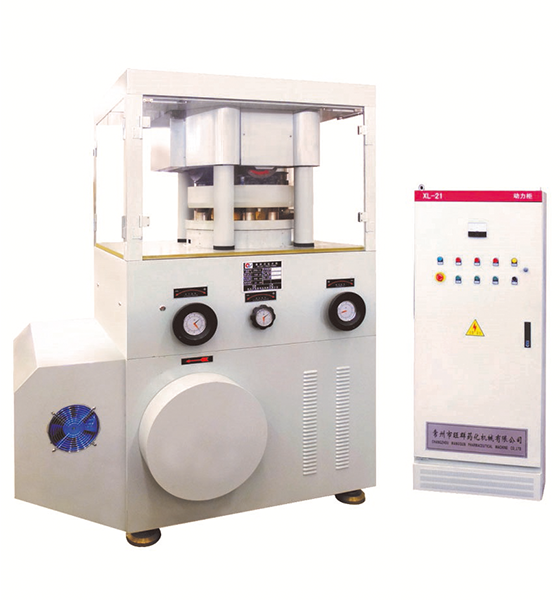
How a Disinfection Tablet Press Ensures Consistent Tablet Weight and Hardness
Industry Background and Market Demand
The global demand for disinfection tablets has surged in recent years, driven by heightened hygiene awareness in healthcare, food processing, and water treatment industries. These tablets, often containing chlorine, bromine, or other active compounds, require precise dosing to ensure efficacy and safety. Inconsistent tablet weight or hardness can lead to under-dosing, reduced disinfection performance, or even chemical instability.
Manufacturers rely on tablet presses to produce uniform tablets at high speeds. For disinfection applications, specialized tablet presses must address unique challenges, such as corrosive ingredients and stringent regulatory requirements. The ability to maintain consistent weight (±1–2% variation) and hardness (typically 50–150 N) is critical for both functionality and compliance with international standards like USP or EP.
Core Technology: Compression Mechanics and Control Systems
A disinfection tablet press operates on the principle of compression. Powdered or granulated material is fed into dies, where upper and lower punches apply controlled force to form tablets. Two key mechanisms ensure consistency:
1. Force Control – Modern presses use servo-electric or hydraulic systems to regulate compression force within ±0.5% tolerance. This minimizes batch-to-batch variation.
2. Weight Monitoring – In-line sensors (e.g., near-infrared or capacitive probes) measure mass before compression, adjusting fill depth in real time.
Advanced models integrate these systems with programmable logic controllers (PLCs) to log data for quality assurance.
Design and Manufacturing Considerations
Structural Components
- Frame and Turret: Heavy-duty cast iron or stainless steel frames reduce vibration, ensuring punch alignment. Corrosion-resistant coatings (e.g., electroless nickel plating) protect against chemical exposure.
- Tooling: Punches and dies made from high-grade tool steel (e.g., D2 or DC53) withstand abrasive disinfectant formulations. Precision grinding ensures tolerances ≤5 µm.
Process Parameters
- Pre-compression: A preliminary compression step removes air pockets, improving tablet density.
- Dwell Time: Longer dwell (e.g., 50–100 ms) enhances bonding between particles, increasing hardness.
Critical Factors Affecting Quality
1. Material Properties – Particle size distribution (PSD) and moisture content influence flowability and compressibility. Granulation may be required for hygroscopic ingredients.
2. Tooling Wear – Frequent inspection and polishing prevent sticking or capping.
3. Environmental Controls – Humidity and temperature fluctuations can alter powder behavior.
Supplier Selection Criteria
When sourcing a disinfection tablet press, manufacturers evaluate:
- Compliance: CE, FDA, or GMP certification.
- Customization: Ability to handle corrosive or high-density formulations.
- After-Sales Support: Availability of spare parts and maintenance training.
Leading suppliers include Fette, Korsch, and Elizabeth, which offer modular designs for easy cleaning and changeover.
Industry Challenges
- Corrosion Resistance: Chlorine-based compounds accelerate wear. Solutions include ceramic-coated punches or single-sided tooling.
- Dust Control: Fine powders pose inhalation risks. Dust extraction systems are mandatory.
- Regulatory Hurdles: Documentation for traceability (e.g., 21 CFR Part 11) adds complexity.
Applications and Case Studies
1. Water Treatment: Municipal plants use 20g calcium hypochlorite tablets for slow-release disinfection. A Spanish manufacturer reduced weight variation from 3% to 0.8% by switching to a servo-driven press.
2. Healthcare: Effervescent disinfectant tablets for surface cleaning require hardness >80 N to prevent chipping during packaging.
Trends and Future Developments
- AI-Driven Optimization: Machine learning algorithms predict optimal compression settings for new formulations.
- Continuous Manufacturing: Rotary presses with integrated drying units streamline production.
- Sustainable Materials: Biodegradable binders (e.g., cellulose derivatives) are gaining traction.
FAQ
Q: How often should tooling be replaced?
A: Depending on usage, punches and dies last 50,000–200,000 compressions. Regular inspection for wear or scoring is advised.
Q: Can a standard tablet press handle disinfectants?
A: Only with modifications. Corrosion-resistant materials and sealed enclosures are essential.
Q: What causes tablet capping?
A: Insufficient dwell time, excessive force, or poor granulation. Adjusting pre-compression or binder content often resolves this.
Conclusion
Consistency in disinfection tablet production hinges on precision engineering, material science, and process control. As regulatory and environmental demands evolve, manufacturers must invest in advanced presses that balance speed, accuracy, and durability. The integration of smart monitoring systems and sustainable practices will define the next generation of equipment.
حقوق الطبع والنشر © 2025 Changzhou Wangqun Pharmaceutical Machinery Co. ، Ltd. جميع الحقوق محفوظة.
خريطة الموقعيستخدم هذا الموقع ملفات تعريف الارتباط لضمان حصولك على أفضل تجربة على موقعنا.
 English
 Español
 Pусский
 Français



 هاتف
هاتف
تعليق
(0)