

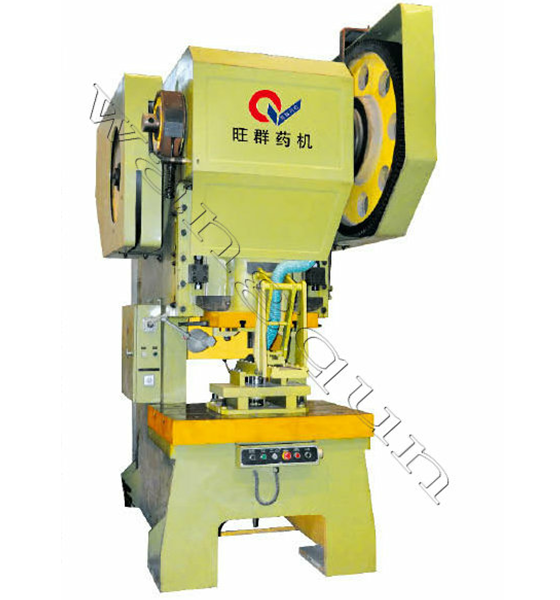
Tablet Press Long-Term Performance Improvement: A Technical Perspective
Industry Background and Market Demand
The pharmaceutical and nutraceutical industries rely heavily on tablet presses to produce consistent, high-quality tablets at scale. With increasing regulatory scrutiny and demand for precision, manufacturers face pressure to optimize tablet press performance over extended periods. Long-term reliability directly impacts operational efficiency, product quality, and compliance with Good Manufacturing Practices (GMP).
Market trends indicate a shift toward continuous manufacturing and Industry 4.0 integration, where real-time monitoring and predictive maintenance play crucial roles. Companies investing in high-performance tablet presses seek solutions that minimize downtime, reduce wear, and maintain uniformity in tablet weight, hardness, and dissolution rates.
Core Concepts and Key Technologies
A tablet press operates by compressing powder or granules into uniform tablets using mechanical or hydraulic force. Long-term performance depends on several critical technologies:
1. Tooling Precision – Punches and dies must maintain tight tolerances to prevent variations in tablet weight and thickness. Advanced coatings (e.g., chromium nitride) reduce friction and extend tool life.
2. Force Control Systems – Modern presses use closed-loop force monitoring to adjust compression dynamically, ensuring consistency despite material variability.
3. Wear Resistance – Components exposed to high friction, such as turrets and cams, require hardened materials or specialized treatments (e.g., plasma nitriding).
4. Lubrication Systems – Automated lubrication reduces mechanical wear and prevents contamination, critical for GMP compliance.
Product Structure, Materials, and Manufacturing Processes
A tablet press consists of several subsystems:
- Feeding System – Ensures uniform material distribution into dies. Poor feed consistency leads to weight variation.
- Compression Assembly – Includes upper and lower punches, dies, and a turret. High-grade tool steel (e.g., D2 or H13) is standard for durability.
- Ejection Mechanism – Must operate smoothly to avoid tablet chipping or sticking.
- Control Panel – Modern presses integrate PLCs with HMI interfaces for real-time adjustments and data logging.
Manufacturing processes such as CNC machining and laser hardening ensure dimensional accuracy and wear resistance. Some manufacturers employ additive manufacturing for complex components to reduce assembly tolerances.
Key Factors Affecting Performance and Quality
1. Tooling Maintenance – Regular inspection and polishing prevent premature wear.
2. Material Properties – Powder flowability, moisture content, and compressibility influence press efficiency.
3. Environmental Conditions – Humidity and temperature affect powder behavior and machine lubrication.
4. Operational Parameters – Compression force, turret speed, and dwell time must be optimized for each formulation.
Supplier Selection and Supply Chain Considerations
When sourcing tablet press components, manufacturers prioritize:
- Material Certifications – Compliance with ASTM or ISO standards for tool steel and coatings.
- Precision Machining Capabilities – Suppliers with advanced CNC and grinding facilities ensure tight tolerances.
- After-Sales Support – Availability of spare parts and technical assistance minimizes downtime.
Leading suppliers often provide lifecycle assessments (LCA) to demonstrate long-term cost efficiency.
Common Challenges and Industry Pain Points
1. Tooling Wear – Frequent replacement increases costs and downtime.
2. Sticking and Capping – Poor formulation or tooling design leads to tablet defects.
3. Regulatory Compliance – Changing GMP requirements demand adaptable equipment.
4. Integration with Smart Systems – Retrofitting older presses for IoT connectivity can be costly.
Application Scenarios and Case Studies
- Pharmaceuticals – A European manufacturer reduced tablet weight variation by 30% after switching to a servo-driven press with real-time force control.
- Nutraceuticals – A U.S. company improved output by 20% using a modular press design that allowed quick changeovers between formulations.
Current Trends and Future Outlook
1. Predictive Maintenance – AI-driven analytics detect wear patterns before failure occurs.
2. Single-Piece Continuous Manufacturing – Combines blending, compression, and coating in one system.
3. Sustainable Materials – Biodegradable lubricants and recycled tooling materials are gaining traction.
4. Hybrid Press Designs – Combining rotary and eccentric mechanisms for flexibility in small-batch production.
FAQ
Q: How often should tablet press tooling be replaced?
A: Depending on usage and material abrasiveness, punches and dies typically last 50–100 million compressions. Regular inspection helps determine replacement timing.
Q: What causes tablet capping, and how can it be mitigated?
A: Capping results from air entrapment or excessive elastic recovery. Solutions include optimizing dwell time, using pre-compression, or adjusting granulation moisture.
Q: Are servo-driven presses worth the investment?
A: Yes, for high-precision applications. Servo systems offer better control over compression profiles, reducing waste and improving tablet uniformity.
By focusing on material science, precision engineering, and smart monitoring, manufacturers can significantly enhance tablet press longevity and performance, ensuring compliance and cost efficiency in an evolving industry.
حقوق الطبع والنشر © 2025 Changzhou Wangqun Pharmaceutical Machinery Co. ، Ltd. جميع الحقوق محفوظة.
خريطة الموقعيستخدم هذا الموقع ملفات تعريف الارتباط لضمان حصولك على أفضل تجربة على موقعنا.
 English
 Español
 Pусский
 Français



 هاتف
هاتف
تعليق
(0)